Article Read Time - 3 Mins
Do Hair Extensions Get Split Ends? How to Prevent and Fix Them
Table of Contents
If you've spotted some frayed, fluffy ends on your extensions, don't panic. Remember, it is real human hair (unless you use synthetic extensions which we don't sell at Cliphair).
Our honest answer is that yes, hair extensions can get split ends. Our extensions are 100% Remy human hair. Remy means the cuticles, the protective outer layer of each strand, all run the same way from root to tip which generally means less tangling and matting. The fact is, though, that because it is real hair, the ends can split just like your own.
The big difference? Extensions don't get natural oils from your scalp. So, they need a little more care. While the answer to “do hair extensions get split ends?” is yes, the good news is that most split ends can be prevented. Here is what to expect, and what to do about it.
Why Hair Extensions Get Split Ends
So, why do my extensions have split ends? Usually, it comes down to a few everyday habits. Here are the main culprits.
- Heat styling: using hot tools without heat protection, or at a high heat, weakens the ends over time.
- Rough brushing: tugging through knots, or using the wrong brush, can snap and fray the ends.
- Dryness: your scalp can't feed oil down your extensions. Lighter shades have also been lightened, so they need extra moisture.
- Friction: pillows, scarves and coat collars all rub against the ends, this is more of a problem during the winter months.
- Harsh shampoos: sulphates (strong cleansing agents) and drying alcohols strip away moisture.
Dryness is the biggest cause of split ends. Our guide on why hair extensions get dry explains it in more detail.
How to Prevent Split Ends on Extensions
How do I stop my extensions getting split ends? Here is the simplest way to keep them soft and strong.
- Protect from heat, every time. Spritz on a heat protection spray before styling. Then use the lowest heat you can to still achieve the style you want.
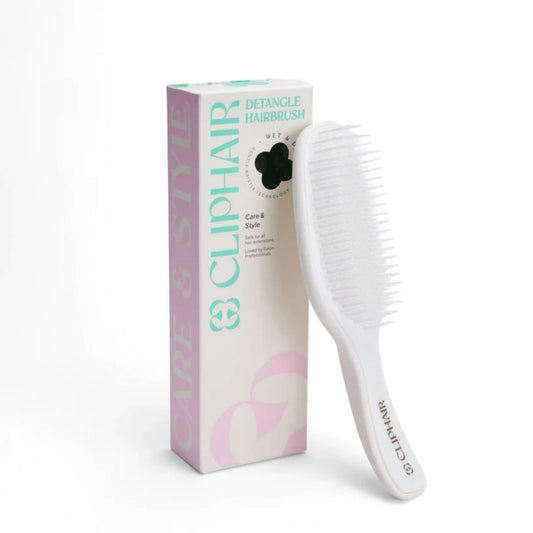
- Brush gently. Start at the ends and work your way up. An extension-safe brush like our Detangling Hairbrush glides through without tugging.
- Mask once a week. A deep-conditioning treatment such as our Deep Moisture Hair Mask puts back the moisture your scalp can't provide.
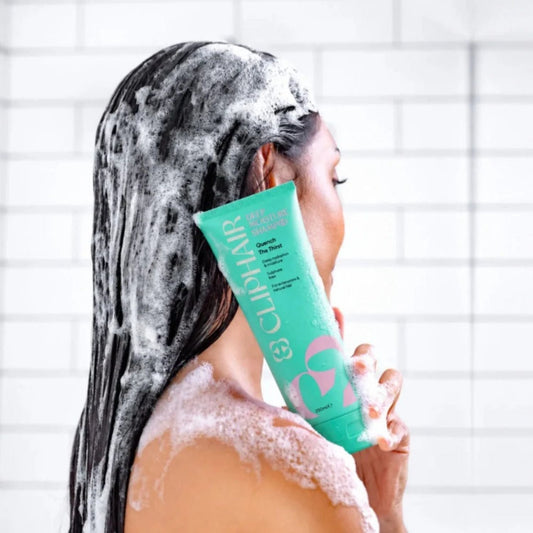
- Switch to sulphate-free. Wash with a gentle shampoo like our Deep Moisture Shampoo. Apply conditioner from the mid-lengths to the ends.
- Clip-ins out before bed. Sleeping in them causes friction and tangles. When they're not in, store your hair extensions properly so the ends stay smooth.
A quick rule: if your ends feel dry or rough, they need moisture, not more heat. For more ideas, read our tips on making your clip-in extensions last longer.
How to Fix Split Ends on Hair Extensions
You can't repair a split end, but a simple trim removes the frayed hair. Without a trim, serums and masks can smooth the ends for a while, but the split is still there underneath.
So, can you trim hair extensions? Yes. Just remember that extensions don't grow back. Every snip takes away length for good. Trim only the very ends, little and often.
Clip-in extensions
A hairdresser can trim or “dust” them for you. Dusting means snipping off only the tiniest bit at the ends, so the hair looks and feels healthier at the end, rather than removing any actual length. Want to try it at home? Go slowly, one weft at a time. Read our guide on what hair dusting is, and pick up tips on the best scissors to trim hair extensions.
Tape-ins, wefts and nano rings
Leave these to the experts, but if you're finding split ends, just ask your extension specialist to trim the ends at your next appointment.
When It's Time to Replace Them
If you're at the point where you've trimmed the ends, you've treated them to a mask, but the ends still look thin and frizzy, and the splits run high up the lengths, that's usually the sign it's time for a fresh set.
Before you decide, give them one more chance. Our guide on how to revive dry hair extensions walks you through it, step by step. Not sure which way to go? Let us know, and we will help you work it out – since we were founded in 2007, our priority has always been to help with confidence and aftercare when buying extensions.
Wondering about split ends in your own hair? Our split ends guide has you covered.
FAQs
What are split ends on hair?
How to know if you have split ends?
Can you repair split ends on hair extensions?
How do I stop my extensions getting split ends?
Looking for salon-worthy hair without breaking the bank? At Cliphair, we’re here to help with high-quality clip in hair extensions for quick transformations and permanent hair extensions for long-lasting length or volume, all made from 100% Remy Human Hair. Extensions need special care and maintenance to preserve their quality, which is why we have our own hydrating haircare products, designed to keep your hair soft and tangle-free.
Need to find your closest shade match? Browse our full range of human hair extensions in over 60 shades or check out our FREE Express Colour Match Service to get a great blend with your natural hair.