Article Read Time - 12 Mins
Why Do Hair Extensions Get Dry? Causes & Fixes
By Nabeel Ahmed
Table of Contents
Your cart
Spend £30.00 more for Free Economy Delivery
You qualify for Free Economy Delivery
You Might Also Like
Moisturising Silky Hairspray For Hair Extensions

Hair Extension Heat Protection Spray

Hair Extension Hanger and Carrier


Subtotal
£0.00 GBP

You're about to be redirected to our Trade website. Please confirm if you'd like to proceed.
Proceed to Trade Website
Article Read Time - 12 Mins
Table of Contents
Do you find yourself constantly wondering, "why are my hair extensions dry and straw-like?" If that's a "yes", you're not alone. Even the best-quality extensions, made from cuticle-correct human hair, can lose their softness over time.
Let's take a closer look, then, at why hair extension dryness happens, the day-to-day habits that can make it worse, and simple fixes to help bring the softness back.
At Cliphair, we've spent more than 17 years helping customers keep their extensions looking and feeling great. Dryness is one of the most common issues we see, and it's almost always fixable with the right approach.
There isn't necessarily just one answer to the question, "why are my hair extensions dry?" However, if we had to pick out one factor above all else, it would be this: your hair extensions don't get the sebum supply from the scalp that your natural hair gets.
Sebum is the oil that your scalp produces to continuously nourish your natural hair. As you brush and style your hair, these oils gradually travel down each strand. This has the effect of conditioning your natural hair to help keep it soft, flexible, and protected.
Hair extensions aren't directly connected to this system. Your hair pieces can't sweat out the same oils your scalp makes, so they need a little extra TLC.
With your hair extensions unable to replace lost moisture naturally, they're prone to becoming slightly less hydrated with every wash, styling session, and day spent in the sun. That's unless you replace such moisture through the right hair care routine.
This shows the importance of proper hair extension care. Moisture will need to be added back to your hair pieces with help from suitable shampoos, conditioners, and treatments. In other words, you can't simply rely on your scalp doing all the work!
Before we go further, let's clear up some potential confusion. All too many people are under the impression that if hair extensions are made from 100% Remy human hair, they shouldn't ever become dry.
This is a particularly relevant topic for our customers here at Cliphair, given that all our extensions are made from 100% Remy human hair. This means the cuticles of the hair used in our extensions are kept intact and run in the same direction.
There are many excellent reasons to choose 100% Remy human hair extensions. This construction allows hair pieces to be washed, styled, and coloured much like your own hair.
None of this makes Remy extensions immune to dryness, though. After all, the fact of hair being Remy doesn't mean it's connected to your scalp. So, it doesn't directly benefit from the scalp's natural oils.
The great advantage of high-quality Remy hair is that it responds exceptionally well to the right routine. So, if you get into the habit of using gentle products and regular conditioning on your Remy extensions, they can stay soft and healthy-looking for much longer than lower-quality alternatives.
Your query that led you to this article might be a little more specific than we've touched on so far. You may be asking, "why are my new hair extensions dry and frizzy?"
If you've only just opened your extensions, don't panic.
A slight feeling of dryness after unpacking is perfectly normal. During manufacturing, packaging, and transport, hair extensions can lose a little surface moisture or become slightly flattened. This can leave them feeling less silky than expected.
Such initial light dryness normally settles down after the first gentle wash with a sulphate-free shampoo, followed by a nourishing conditioner or hair mask.
On the other hand, if your new extensions continue to be dry with no sign of improvement, this is likely to do with how you're looking after them day by day. Heat styling, using the wrong products, and/or incorrect brushing habits can all contribute to extensions being persistently dry.
The products that you use every wash day can make a huge difference. So, it's an aspect of your hair extension care routine that you'll need to be especially vigilant about.
Many standard shampoos contain sulphates or drying alcohols that are designed to remove oil from the hair and scalp. While this may suit some natural hair types, it can rapidly strip away vital moisture from extensions.
Responsible and effective hair care for extensions, then, typically involves choosing sulphate-free and alcohol-free products.
When such shampoos and other products are formulated specifically with hair pieces in mind, this will greatly help preserve softness without leaving heavy residue behind.
The hair in your extensions will sustain damage gradually over time if you're repeatedly exposing it to a high level of heat without doing anything to protect it.
So, make sure you always spray a heat protectant before using straighteners or tongs. Keep the temperature moderate, too, instead of maxing it out.
High heat directed right at the hair tends to pull out moisture especially quickly.
Instead, hold the dryer a little further away, around 15 to 20 centimetres, and put it on a medium heat setting where practical. Keep the dryer moving continuously rather than concentrating heat in one place.
Many people accidentally cause frizz when they're trying to prevent it.
A classic mistake is to rub extensions vigorously with a towel. This generates friction that roughens the hair's outer layer, making it appear dry and fluffy. To avoid this, use a soft towel or microfibre towel to gently squeeze out excess water.
Your brushing technique will be no less crucial.
Don't brush your extensions when they're bone dry. This creates friction that can lead to frizz, breakage, and unnecessary shedding.
Instead, apply conditioner first, followed by carefully brushing the hair while it's still wet. This should involve starting from the ends and gradually working upwards in small sections.
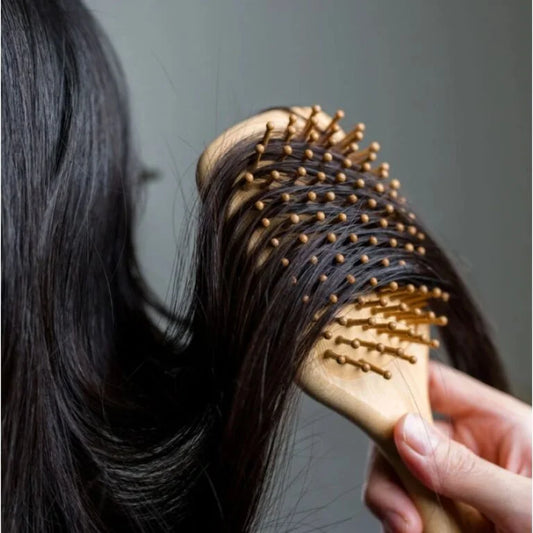
Choosing the right brush is equally important. If you opt for an extension-friendly detangling brush that doesn't have any bobbled tips, you'll be able to trust in it gliding through the hair more smoothly than a standard brush. It'll be much gentler on the strands and attachment points.
You'll find suitable detangling brushes and accessories, such as "The Wet One", in the Cliphair range.
Like your natural hair, extensions are affected by sunlight. Ultraviolet (UV) light dehydrates hair over time.
The difference, of course, is that your natural hair receives fresh oils from your scalp after sun exposure. As your extensions don't have scalp oils to help compensate, they can dry out faster in strong sun.
Are you set to spend long summer days outdoors or heading on holiday? Using a nourishing leave-in conditioner and wearing a hat (where practical) can help reduce moisture loss.
Both chlorine and salt water can have the effect of stripping moisture, fading colour, and roughening the cuticle.
If you're wearing clip-in hair extensions, it's best to remove them before swimming. Make sure you store your clip-ins somewhere clean and dry until you're finished.
Do you wear permanent extensions such as tape-ins, wefts, or nano rings? In that case, use a leave-in conditioner before swimming if possible, and rinse your hair with clean water afterwards.
Wearing a swim cap can also give you extra protection during longer sessions in the water.
Finding a balanced routine is crucial here, as both extremes cause problems.
Washing your extensions too frequently can gradually strip away the conditioning ingredients you've applied to them. As a result, your hair pieces could end up feeling drier than necessary.
On the other hand, leaving extensions unwashed for too long allows oils, styling products, and environmental dirt to accumulate. Such build-up can make the hair feel coarse, heavy, and lifeless.
As the word "temporary" suggests, these hair pieces give you the flexibility to remove them when you don't need to wear them. This makes it easier to care for these extensions at home.
If you wear clip-in hair extensions or halos, take them out at night, store them in a dry box away from heat and sunlight, and wash them as needed.
Wondering how to dry hair extensions like this? In a nutshell, patience pays off. After washing, gently squeeze away excess water with a soft towel. Then, lay the extensions flat or hang them to air dry naturally.
Air drying hair extensions like clip-ins and halos helps retain moisture and minimises repeated exposure to heat.
Professional extension methods remain fitted for much longer. This makes consistent maintenance even more important for warding off dryness.
Our Classic Tape-Ins here at Cliphair, for instance, typically last for three to six months. For our Remy Royale Tape-Ins, meanwhile, the usual longevity is around six to 12 months with good maintenance.
Never attempt to take out or reapply permanent hair extensions like these yourself. Instead, always book professional appointments for refitting, maintenance, or removal.
Our tape-in hair extensions collection serves up both classic and premium options.
Sometimes, dryness isn't caused by the hair itself, but instead by what's happening around the attachment points.
Tape adhesive, for example, can occasionally collect styling products if the hair isn't cleansed thoroughly. This can lead to nearby strands feeling stiff or rough.
There can also be the problem of rings or bonds catching neighbouring hairs if they haven't been maintained for some time. Localised tangling can be the result.
A stylist can check for these issues and correct them during a maintenance appointment.
One of the simplest improvements you can make to your extension care regime to help ward off dryness, is changing your shampoo and conditioner.
It's important to look for gentle and moisturising formulas that are designed for extensions. Sulphate-free and alcohol-free formulas can cleanse the hair without stripping away vital moisture. This can help keep extensions softer for longer.
Sure enough, Cliphair's Quench the Thirst range has been developed with hair extensions in mind. If, then, you're looking for the ideal shampoo or the best conditioner for hair extensions, why not read our blog post about the Quench the Thirst range's offerings, or browse our full extension-friendly hair care collection?
A good leave-in conditioner for hair extensions will also play an important role, by helping to keep ends soft between washes.
In the grand debate about what makes the best treatment for dry hair extensions, it's difficult to beat the combination of a weekly mask with gentle everyday care.
The fact is, this proactive combined approach will usually be far more effective than relying on intensive treatments only once your hair already feels dry.
Ultimately, while conditioner helps after every wash, using the right hair mask for extensions, such as our Deep Moisture Hair Mask in the Quench the Thirst collection, will give you a deeper level of hydration. It will help replenish moisture lost through washing, styling, and environmental exposure. As a result, you can expect reduced roughness and improved shine.
Get to know your options with our guide to the best hair masks for extensions.
A common question is, "can you use dry shampoo on hair extensions?"
The answer is "yes", but moderation is key; you shouldn't turn to it every day. Over-use of dry shampoo and failing to wash it out properly can contribute to product build-up on extensions, leaving them feeling dull or dry.
The appropriate use of dry shampoo for hair extensions, however, can help refresh your style between washes and absorb excess oil around your roots.
Your approach, then, should be to use dry shampoo only when needed. Follow up with a thorough wash using extension-friendly products.
Our experts are also sometimes asked to give advice on the best oil for dry hair extensions. To this, we suggest applying a lightweight oil on the ends, as this will further help combat dryness without weighing the hair down.
Are your extensions already quite dry or damaged? Our guide on how to revive dry hair extensions walks you through the next steps.
A persistent straw-like texture, matting, or increased shedding despite good home care are all signs that it's time to seek professional help.
Matting needs particularly careful attention. So, if this concerns you, look at our article on how to prevent hair extensions matting in the first place.
For any permanent hair extension method such as tape-ins, wefts, nano rings, or I-tips, a specialist can assess the bonds, remove any product build-up safely, and refit the hair pieces if needed.
Here at Cliphair, we're staffed by real hair extension experts, never bots. Our recommendation is to always see a qualified stylist for any issues with your professional extensions, instead of attempting removal or repairs yourself.
It's completely normal for new extensions to be slightly dry after unpacking. This often improves after the first gentle wash with sulphate-free shampoo and conditioner.
If dryness continues, this'll probably be the fault of heat styling, unsuitable products having been used on them, or the wrong brushing techniques, rather than the extensions themselves.
Yes! Air drying is one of the gentlest ways to dry human hair extensions. Squeeze out excess water with a soft towel first. Then, allow them to dry naturally if this is practical, or use a medium or cool heat setting on a dryer held at a distance.
Yes, but you should only use it sparingly. Dry shampoo can be helpful between washes, but it's crucial not to treat as an alternative to regular cleaning.
Washing out dry shampoo regularly is also important. Otherwise, product build-up could leave your extensions feeling dry and heavy over time.
There's no single schedule that's the right one for every wearer of extensions. Most people, though, find that washing every seven to 14 days, or whenever their hair pieces feel dirty or product-heavy, works well.
So, feel free to adjust this schedule based on your lifestyle. Always follow with a good conditioner or mask, too.
Looking for salon-worthy hair without breaking the bank? At Cliphair, we’re here to help with high-quality clip in hair extensions for quick transformations and permanent hair extensions for long-lasting length or volume, all made from 100% Remy Human Hair. Extensions need special care and maintenance to preserve their quality, which is why we have our own hydrating haircare products, designed to keep your hair soft and tangle-free.
Need to find your closest shade match? Browse our full range of human hair extensions in over 60 shades or check out our FREE Express Colour Match Service to get a great blend with your natural hair.
 Ethically Sourced
 Outstanding Reviews
 Cliphair Rewards
 Free delivery & returns
 Buy now pay later