Article Read Time - 11 Mins
Dry Hair Treatment: How to Care for Dry Hair
By nabeel ahmed
Table of Contents
Your cart
Spend £30.00 more for Free Economy Delivery
You qualify for Free Economy Delivery
You Might Also Like
Moisturising Silky Hairspray For Hair Extensions

Hair Extension Heat Protection Spray

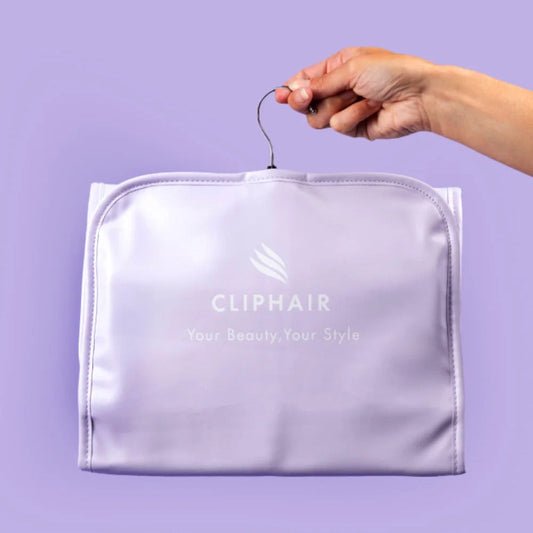
Hair Extension Hanger and Carrier


Subtotal
£0.00 GBP

You're about to be redirected to our Trade website. Please confirm if you'd like to proceed.
Proceed to Trade Website
Article Read Time - 11 Mins
Table of Contents
If gorgeously glossy hair seems like a pipe dream to you, don't worry, we've got you. Yup, dry hair sure can put a dampener on your shiny hair fantasies, but we know the cure.
By switching up your haircare routine and introducing ultra-moisturising products, as well as tweaking your diet, lifestyle, and styling habits, you can transform your tresses from brittle to bouncy in no time.
Our illuminating hair care for dry hair guide includes practical tips and all the knowledge you need to tackle your lacklustre locks.
We cover practical guidance and product recommendations, including:
Do you often find yourself wondering, "why is my hair so dry?" It's one of the most common hair worries there is, and it's usually fixable once you know what's behind it.
Several factors may be at play here. They could include the likes of:
You might not be entirely sure, at least at first, whether you do have dry hair. After all, what counts as a "normal" level of hair dryness or moisture? Also potentially distorting the picture is the fact that we all get affected by dry hair at some point in our lives, usually in the cold winter months.
But if you have two or more of the below symptoms all year round, you might suffer from a more entrenched dry hair condition:
They may be closely linked, but dry hair and damaged hair are not the same thing:
The great news is that hydrating treatments can help improve both dryness and the appearance of damage.
If, however, your hair suddenly becomes extremely dry and it occurs alongside hair loss, skin changes, or other symptoms, it's sensible to ask your GP for advice.
Are you suffering from tired tresses that are in desperate need of revitalisation? In that case, you'll want to be sure of finding the right shampoo and conditioner for dry hair.
By this, we're referring to products that are designed to nourish, hydrate, and moisturise. Whatever shampoos and conditioners you're considering, check their ingredients lists and keep an eye out for these hydration heroes:
If you're wondering how to care for dry hair at home, our deep moisturising products contain goodies such as shea butter, baobab seed oil, and rice proteins.
These are ideal dry hair products. Depending on the specific product chosen, their moisturising and nourishing formulas may help reduce dryness, enhance shine, combat frizz, and reduce the appearance of split ends.
Hair care products from Cliphair can be used to boost hydration on natural hair and hair extensions. Our Deep Moisture Conditioner, for example, is one of the best conditioners for hair extensions because it helps smooth the cuticle, minimising the appearance of frizz. This can help improve softness and shine.
You don't have to just take our word for it, though! Look at the reel below to discover how @_laviniamartin uses Cliphair products to breathe new life into her hair:
Is your hair drier than the Sahara Desert right now? Well, in that case, it might need a touch more TLC.
Slathering on a deep conditioning treatment at least once a week promises to rehydrate those locks. Choose rich, creamy formulas that are packed with baby-soft-hair-inducing ingredients such as argan oil, shea butter, and keratin.
Masks are an inexpensive alternative to salon treatments. Consequently, they're a savvy solution when planning how to care for dry hair at home. Intensive masks work their magic by penetrating the hair shaft for longer. Follow the timing on the pack, usually 10 to 15 minutes. Longer doesn't mean better.
Comb through with a wide-tooth comb to ensure every strand is covered. Leaving a rich mask on overnight can leave hair limp rather than soft, so stick to the time on the pack.
Alternatively, make like @elliecraven0 and incorporate your mask into a daytime hairstyle. We love how she creates a sleek bun using her Cliphair Deep Moisture Hair Mask:
Working with hair since 2007, Cliphair knows what does and doesn't work for reviving dry hair and hair extensions.
So, whatever product(s) of ours you use, you can be confident that they have been formulated to help support dry hair and extension care.
Here's a quick guide to the ones you should choose:
Think of it this way: the shampoo and conditioner are your daily maintenance, while the hair mask acts as your weekly reset.
As hair extensions don't have any connection to the scalp's natural oils, they sure get extra thirsty.
That's bad news, because when extensions become dehydrated, they can:
So, to preserve your look, you can't afford to neglect one in favour of the other. Instead, you'll need to do everything you can to keep your natural hair and your extensions looking healthy and beautifully blended.
To achieve this, treat them to the shampoo, conditioner and mask routine set out above. Make sure you focus the product on the lengths and the ends, avoid overloading bonds on permanent extensions, and always be gentle when detangling.
For more tips on how to get your hair pieces good as new, check out our guide to how to revive dry hair extensions. You've also got the option of browsing our clip-in hair extensions collection for seamless matches.
We all know heat styling is damaging to our hair, even if we're blessed with the healthiest of locks.
Implement the following into your hair care for dry hair routine to protect your locks from excessive heat:
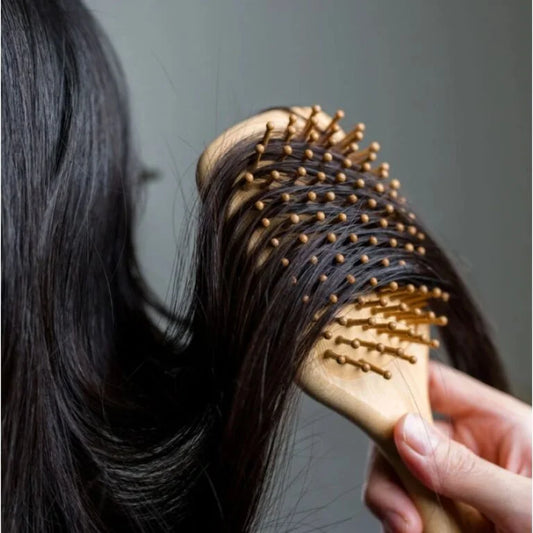
Scratchy towels, vigorous brushing, and even the wrong type of pillow can cause dehydrated tresses.
Check out these tips to ensure you're not ruining your hair care for dry hair routine by making the following rookie mistakes:
Beauty radiates from the inside out. So, while it's great to invest in ultra-moisturising products and fix all your bad hair habits, there's something else you shouldn't neglect nourishing your insides.
If you desire hair that dazzles with a mirror-like shine, make sure you're incorporating these goodies into your diet:
It isn't a secret that excessive stress and anxiety are bad for us. But you might not have been fully aware of the impact it can have on your hair.
Stress can affect your overall hair health and disrupt the normal hair growth cycle. So, while stress is rarely the only cause of dry hair, ongoing stress can make existing hair concerns feel worse.
What's the solution? Well, we can't control external circumstances, but we can control our own inner lives. Incorporating the following stress-reducing techniques, then, will be an important part of your hair care for dry hair:
In short, it's about going for those quick wins or whatever unwinds you, while also accepting that life happens. Your hair, not to mention your all-round body and mind, will thank you.
Transforming dehydrated hair into luminous locks certainly takes a holistic approach. By investigating all areas of your life, from diet and lifestyle to hair products and styling habits, you can develop a powerful and reliable hair care for dry hair routine that works.
Remember to stay consistent and patient, and gleaming tresses could be well within reach.
The best treatment for dry hair combines a gentle sulphate-free shampoo, a nourishing conditioner, and a weekly deep conditioning mask. Hydrating inside and out, and protecting your hair from excessive heat, will further help deliver long-lasting results.
This is often caused by a mix of over-washing, heat, hard water, environmental conditions, and product buildup.
Bear in mind that dryness and frizz are not the same. Dry hair lacks moisture, while frizz happens due to the hair cuticle lifting and absorbing humidity from the air.
You can’t expect to completely repair dry hair overnight. However, by using a rich hair mask, reducing heat styling, and applying moisturising products, you can make your hair feel noticeably softer after just one or two washes.
A full turnaround takes a few consistent weeks.
Yes, you can, if it’s suitable for hair extensions. Our own Deep Moisture Hair Mask is extension-safe and may help maintain the appearance and condition of hair pieces for longer.
When using this hair mask, you should pay particular attention to the mid-lengths and ends. Avoid overloading the attachment area if you wear permanent extensions, and rinse thoroughly afterwards.
Most people with dry hair should wash it two or three times a week, rather than daily. Washing less frequently helps preserve your hair’s natural oils while keeping your scalp clean.
Looking for salon-worthy hair without breaking the bank? At Cliphair, we’re here to help with high-quality clip in hair extensions for quick transformations and permanent hair extensions for long-lasting length or volume, all made from 100% Remy Human Hair. Extensions need special care and maintenance to preserve their quality, which is why we have our own hydrating haircare products, designed to keep your hair soft and tangle-free.
Need to find your closest shade match? Browse our full range of human hair extensions in over 60 shades or check out our FREE Express Colour Match Service to get a great blend with your natural hair.
 Ethically Sourced
 Outstanding Reviews
 Cliphair Rewards
 Free delivery & returns
 Buy now pay later